
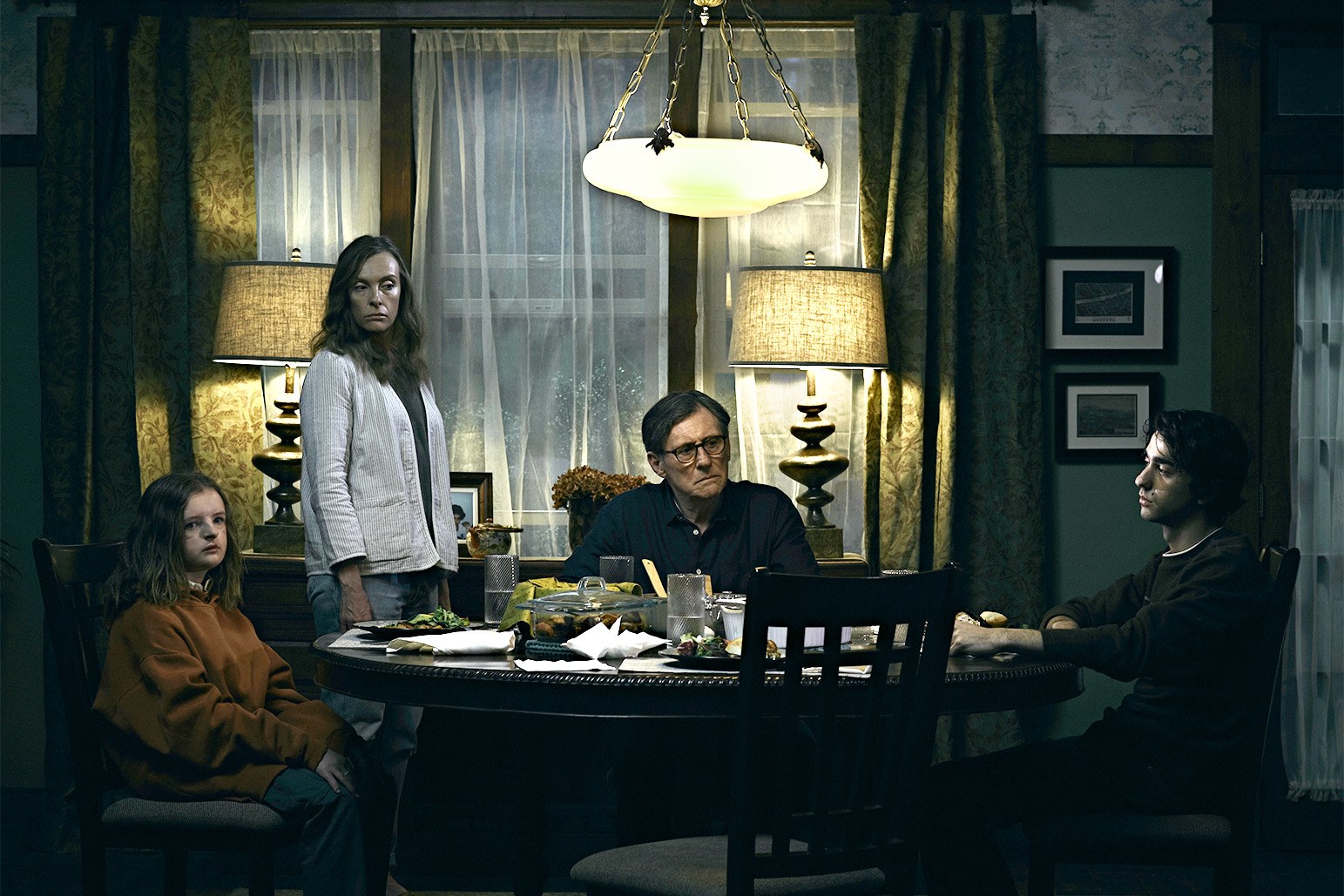
“Psychic inheritance” is a spiritual idea, not a scientifically established trait passed through a single family line. Families can share sensitivity, beliefs, storytelling traditions, attention habits, stress responses, and ways of reading social cues. Those influences may feel like an inherited gift without proving telepathy, precognition, or supernatural perception.
You do not need to deny a meaningful family tradition. You can treat intuition as a fallible signal: notice it, record it, check alternatives, and use it to ask better questions. It should not diagnose illness, identify guilt, reveal another person’s private thoughts, predict money, or override evidence and consent.
What may run in a family?
| Family pattern | How it may feel | Grounded interpretation |
|---|---|---|
| Close attention to tone and body language | “We know before anyone says it.” | Shared experience can make subtle cues easier to recognize. |
| Vivid dreams and strong imagery | “Our family receives messages.” | Dream recall, sleep patterns, culture, and discussion can reinforce meaning. |
| Fast reactions to danger | “We have a sixth sense.” | Experience may summarize cues quickly, but anxiety and bias can also trigger alarms. |
| Spiritual rituals and stories | “The gift passes through generations.” | A valued practice may be transmitted socially without establishing a biological power. |
| High emotional sensitivity | “We absorb other people’s energy.” | Empathy, vigilance, stress, and learned caregiving may all contribute. |
Separate family history from proof
A striking story can be sincere and still incomplete. Ask when the prediction was recorded, how specific it was, how many misses occurred, who knew the information, and whether the meaning changed after the outcome. Families often retell the best matches while ordinary misses disappear.
Build a simple family map with three columns: the original account, facts that can be independently checked, and meanings added later. Do not pressure relatives to disclose trauma, health information, or beliefs. A respectful record allows “unknown” to remain an answer.
A daily practice that does not assume certainty
- Notice. Write the raw sensation, image, thought, or dream before interpretation.
- Locate. Note sleep, stress, hunger, medication, substances, setting, and recent conversations.
- Label. Write “I had the thought that…” rather than “I know that…”
- List alternatives. Include at least two ordinary explanations.
- Limit the stakes. Choose a reversible action or gather more evidence.
- Log the outcome. Count exact matches, partial matches, misses, and unscorable impressions.
- Learn. Ask whether the practice improved judgment or increased fear and checking.
This article focuses on family meaning and responsible everyday use. For skill-building exercises, prospective scoring, and the PAUSE method, use Tips for Sharpening Your Intuition.
Intuition in ordinary decisions
An intuitive nudge can identify what deserves attention. Then match the next step to the decision:
- Creative choice: try the idea for ten minutes.
- Social concern: ask a neutral question and allow correction.
- Work decision: compare costs, deadlines, references, and alternatives.
- Safety concern: leave immediate danger when safely possible, then document facts and seek help.
- Health concern: record symptoms and consult a qualified professional.
- Financial or legal concern: pause payment or signing and obtain independent advice.
Your “higher self” can be used as a values metaphor rather than an infallible outside authority. The practices in Connecting With Your Higher Self translate that idea into values, reality checks, boundaries, and action.
Nature, quiet, and meditation
Walking outside, reducing notifications, or sitting quietly can make internal signals easier to notice. That does not authenticate their cause. Treat nature and meditation as attention settings, not channels that guarantee messages.
The National Center for Complementary and Integrative Health summarizes possible benefits, mixed research, and reported negative effects of meditation. It advises against using meditation to replace or postpone conventional care. Use natural breathing, avoid sleep deprivation and fasting, and stop when anxiety, dissociation, intrusive memories, or unusual perceptions increase.
Choosing a reader or teacher
No teacher can certify a hereditary psychic power from your surname, palm, aura, birth date, or payment history. A responsible practitioner welcomes questions, states prices before the session, respects privacy and consent, avoids diagnoses and guarantees, and supports ordinary medical, legal, financial, and mental-health care.
Leave if someone says your family carries a curse, only they can activate or protect your gift, refusing training will harm relatives, or repeated fees are required. The Federal Trade Commission’s coaching-scam guidance recommends investigating credentials and complaints and resisting guaranteed outcomes, high-pressure sales, and costly upsells.
When a “gift” label becomes harmful
Do not use a psychic-child or family-gift label to explain every fear, sensory change, unusual perception, learning difference, illness, or conflict. A label can delay appropriate assessment and make a person feel responsible for events they cannot control.
Pause practice and seek professional support when experiences disrupt sleep, school, work, relationships, safety, or self-care; cause compulsive checking; or become difficult to question. Use urgent help for immediate danger, severe confusion, rapidly worsening perceptions, or commands to harm.
Frequently asked questions
Can psychic ability be inherited?
No specific hereditary psychic power has been established. Families can share temperament, attention habits, beliefs, rituals, stories, and learned ways of interpreting experiences.
Does a family history prove my intuition is accurate?
No. Record impressions before outcomes, keep misses, check prior knowledge and alternative explanations, and match confidence to evidence.
Can I develop intuition without a psychic teacher?
Yes. You can practice observation, prospective journaling, decision review, communication, and low-stakes experiments on your own. A teacher is optional and should never claim exclusive control over a gift.
When should I stop intuition practice?
Stop when it increases fear, compulsive checking, sleep loss, unusual perceptions, loss of functioning, or risky decisions. Seek qualified support and use urgent help for immediate danger or commands to harm.