
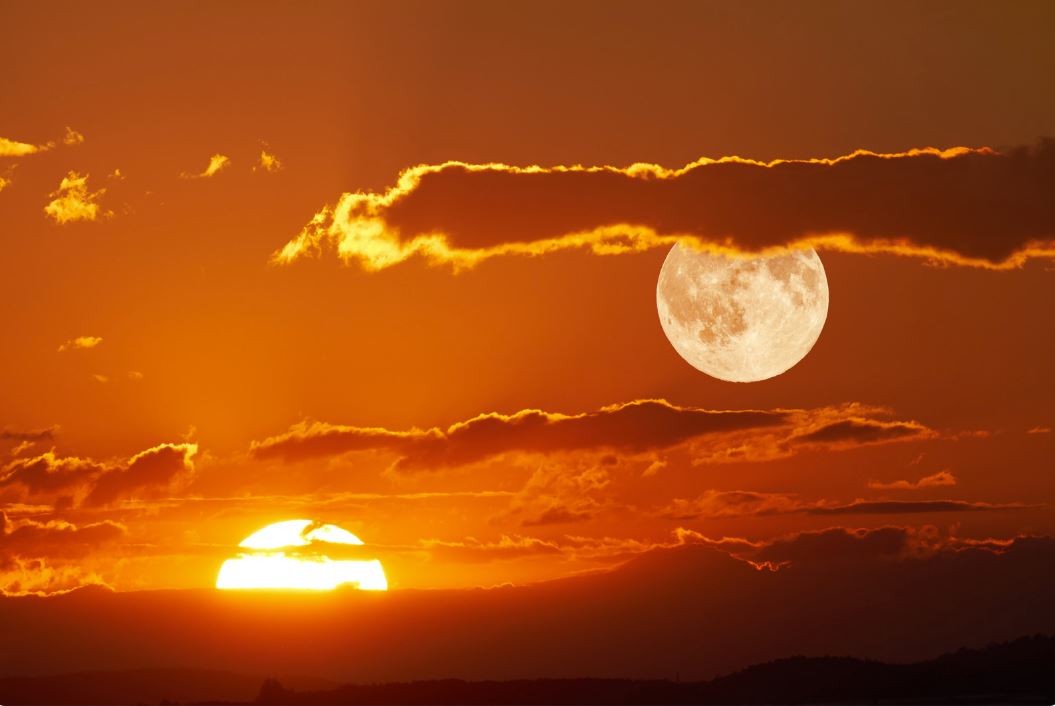
The sun and moon make a powerful symbolic pair: visibility and mystery, activity and rest, expression and reflection. You can use those contrasts in a spiritual or journaling practice without claiming that sunlight is masculine, moonlight is feminine, or lunar phases control hormones, personality, intuition, pregnancy, or the two sides of the brain.
The evidence-based day-and-night story is circadian rhythm. Light and darkness help time the body’s approximately 24-hour processes. The spiritual story is optional meaning. Keeping those two layers separate makes the practice more inclusive and safer.
What sunlight, darkness, and moonlight actually do
The National Institute of General Medical Sciences explains that circadian rhythms are physical, mental, and behavioral changes over a 24-hour cycle. Light and dark are major influences, while food, stress, activity, social environment, and temperature also matter. In the evening, the brain normally produces more melatonin, which supports sleepiness.
This does not mean everyone becomes logical by day and creative by night. Chronotype, work schedules, age, sleep debt, health, medication, caregiving, latitude, season, and light exposure can all change alertness. Shift workers and people with some sleep disorders may need schedules that differ from conventional daytime routines.
Moonlight is reflected sunlight, not a separate energy emitted by the moon. NASA’s guide to moon phases shows that phases reflect the changing geometry among the sun, moon, and Earth. A full moon rises near sunset, while a new moon is in the daytime sky. The phase can be meaningful in a ritual without being presented as a force that determines behavior.
Correcting the left-brain and right-brain story
The brain’s hemispheres do have some specialized functions, and each hemisphere controls much of the opposite side of the body. But people are not divided into “logical left-brained” and “creative right-brained” types, and the sun does not activate one hemisphere while the moon activates the other. Everyday tasks involve networks across both sides.
Blocking one nostril or sleeping on one side is not a proven way to quiet a hyperactive hemisphere or treat insomnia. Avoid restricting breathing, especially with congestion, respiratory illness, sleep apnea, or anything that makes breathing uncomfortable. Persistent trouble sleeping deserves a practical sleep review and, when needed, qualified care.
A sun-and-moon practice without gender rules
Use “sun” and “moon” as flexible metaphors rather than fixed masculine and feminine identities. Anyone can need outward action or inward reflection. Neither is superior, and balance does not mean a perfect fifty-fifty split.
| Sun prompt | Moon prompt |
|---|---|
| What needs to be seen or named? | What needs quiet observation before action? |
| What can I begin, share, or complete? | What can I release, pause, or reconsider? |
| Where do I need clearer evidence? | Which feeling or dream deserves a note, not a verdict? |
| What boundary should I communicate? | What privacy or rest should I protect? |
| Whose perspective should be included? | What assumption should remain uncertain? |
If you prefer zodiac and chakra symbolism, the four-element zodiac–chakra guide offers a separate set of earth, water, fire, and air prompts. This page stays focused on daylight, darkness, and paired sun–moon reflection.
A realistic morning practice
- Notice conditions. Record wake time, sleep quality, weather, mood, and any schedule constraint.
- Seek appropriate light. Spend time outdoors when practical, or use ordinary indoor light. Protect skin and eyes according to health guidance; do not stare at the sun.
- Name one visible task. Choose a step you can start or schedule today.
- Check the cost. Ask what time, money, permission, or support the task actually requires.
- Write one “sun” sentence. “Today I will make this value visible by…”
Morning reflection does not manifest an outcome by itself. It can clarify intention and make a next action easier to remember. The result still depends on circumstances, other people, skill, chance, and follow-through.
A realistic evening practice
- Reduce demands. Choose a stopping point for work and decision-making when possible.
- Review without grading your worth. Note one action that helped, one that did not, and one unfinished item.
- Separate event from interpretation. “They did not reply” is an event; “they no longer care” is one possible interpretation.
- Choose tomorrow’s first step. Put it on a list so you do not have to rehearse it in bed.
- Write one “moon” sentence. “For tonight, I can let this remain unresolved…”
The National Heart, Lung, and Blood Institute recommends consistent sleep and wake times, a quiet hour before bed, less bright artificial light in that hour, and a cool, dark, quiet bedroom as part of healthy sleep habits. Those steps are more evidence-based than assigning insomnia to moon energy or one brain hemisphere.
A seven-day observation sheet
If you think a phase, time of day, or ritual changes your mood, use a prospective record rather than memory alone. For seven days, note:
- sleep and wake times;
- daylight and screen exposure;
- caffeine, alcohol, exercise, and meals;
- medication or symptoms when relevant;
- stressful and supportive events;
- mood and energy on a simple 0–10 scale; and
- the spiritual practice, if any, completed that day.
Review the whole sheet once at the end. Include days that do not match your theory. A pattern can generate a question, but it does not establish that the moon caused the change. For a broader method that connects reflection to small actions, use the values-to-action audit.
Yoga, pregnancy, and health claims
Yoga may support movement, relaxation, or wellbeing for some people, but it does not guarantee happiness, low-risk pregnancy, a particular labor time, or birth at daylight. Pregnancy care and exercise should be individualized with a qualified clinician, especially with pain, bleeding, dizziness, contractions, medical complications, or activity restrictions.
Mood changes, insomnia, and energy shifts can have many causes. Seek medical advice when sleep problems persist, interfere with daily functioning, occur with breathing pauses, or appear alongside severe mood change. Use emergency or crisis services for immediate danger or thoughts of self-harm.
Frequently Asked Questions
Do the sun and moon control different sides of the brain?
No. The hemispheres have some specialized functions, but both work together in ordinary tasks. Sunlight and moonlight do not switch logical and creative halves on and off.
Can moon phases change hormones or personality?
No reliable evidence supports using lunar phases to explain an individual’s hormones or personality. Light and dark do influence circadian timing, but stress, sleep, activity, health, medication, and many other factors also matter.
Can I use sun and moon energy as a spiritual practice?
Yes, as optional symbolism. Use the sun for prompts about visibility and action and the moon for rest and reflection, without treating either as a medical cause or a rule about gender.
Will alternate-nostril breathing cure insomnia?
No. A gentle breathing practice may feel relaxing for some people, but it is not a cure and should never obstruct breathing. Persistent or impairing sleep problems need evidence-based assessment and care.