
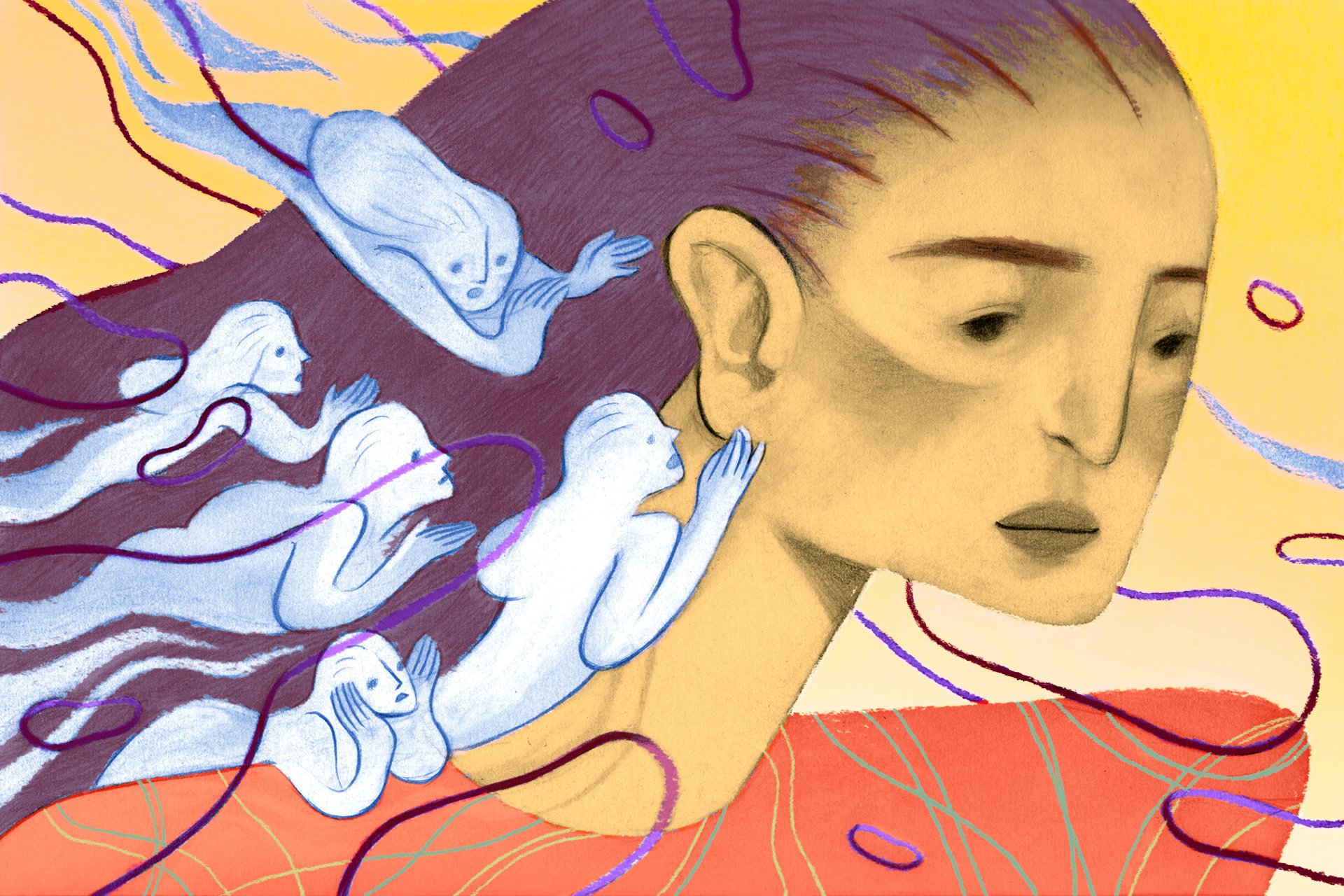
The phrase “psychic or crazy” is stigmatizing and cannot diagnose anything. People can have spiritual beliefs, vivid imagery, unusual perceptions, grief experiences, intrusive thoughts, or inner voices for many reasons. A checklist cannot determine whether someone has a psychic ability or a mental-health condition.
The useful question is: Does the experience need an ordinary explanation, a medical or mental-health assessment, an immediate safety response, or simply a low-stakes place in personal meaning? Curiosity and professional care can coexist.
Ten grounded checks for unusual experiences
1. Describe what happened without naming the cause
Write “I saw a brief flash at the edge of my vision” rather than “a spirit appeared.” Record where you were, how long it lasted, whether you were falling asleep, and whether anyone else or a device detected it. Observation and interpretation are different steps.
2. Check immediate physical safety
Look for smoke, gas, wiring problems, carbon-monoxide alarms, medication errors, injury, fever, dehydration, or substance exposure. Sudden flashes with new floaters, a shadow, or vision loss need prompt eye care. Sudden confusion, weakness, severe headache, seizure, or loss of awareness needs urgent medical assessment.
3. Review sleep and timing
Brief images, sounds, a name being called, or a sense of presence can occur while falling asleep or waking. Severe sleep loss can also affect perception, attention, and judgment. Record sleep duration and whether the experience continues when rested and fully awake.
4. Review substances, medications, and health changes
Alcohol, cannabis and other drugs, withdrawal, prescription or over-the-counter medicines, migraine, infection, sensory loss, neurological conditions, and mental-health conditions can contribute to unusual perceptions. Do not stop prescribed medication on your own; discuss timing and symptoms with the prescriber.
5. Notice whether it feels internal or externally present
Ordinary inner speech is often recognized as occurring in the mind. A voice may need assessment when it seems externally real, has an identity, comments persistently, issues commands, or is difficult to distinguish from an outside speaker. The content sounding kind does not prove a spirit source, and negative content does not prove it is merely an “ego.”
6. Check frequency, duration, and change
An isolated, brief experience differs from a rapidly increasing pattern. Track when it began, how often it occurs, how long it lasts, and whether sleep, work, hygiene, relationships, money, or daily tasks are changing.
7. Test flexibility
Can you consider several explanations, or does one interpretation feel absolutely certain despite conflicting evidence? Can you postpone acting? Difficulty distinguishing reality from fantasy, intense suspiciousness, confused speech, or a major decline in functioning deserves prompt support.
8. Examine consent and commands
No voice, guide, reader, or spiritual belief should direct you to harm, stalk, threaten, isolate, surrender money, reveal passwords, stop care, or violate another person’s refusal. Do not act on commands. Move toward other people and professional help.
9. Ask what the interpretation costs
A healthy personal meaning does not require escalating payments, endless cleansing, secret contact, or dependence on one authority. Fear-based sales and curse claims are exploitation risks, not evidence that a spiritual emergency is real.
10. Seek an assessment when in doubt
A licensed professional can examine sleep, mood, trauma, medication, substance use, sensory changes, and physical health. Getting help does not force you to abandon prayer, culture, or spirituality. It adds information and options.
No behavior reliably proves a spirit source
The original list claimed spirits appear briefly, leave when told, respect freedom, never interrupt schedules, use quick voices, give compassionate advice, and answer questions. None of those qualities identifies the source of a perception. Experiences can vary, and reassuring content can still be inaccurate.
Likewise, constant or negative voices are not evidence that someone simply needs psychic training. They may be distressing symptoms that deserve care. Do not wait for a reader or spiritual teacher to certify the experience.
A four-level response guide
| Level | Examples | Response |
|---|---|---|
| Reflect | Brief, low-distress image or dream with functioning intact | Journal, rest, and keep multiple explanations open |
| Schedule care | New or recurring perceptions, medication change, sleep disruption, or concern | Contact a health professional and document timing |
| Urgent care | Rapid worsening, severe agitation, marked confusion, inability to function | Use urgent medical or mental-health services |
| Emergency | Commands to harm, immediate danger, suicidal intent, violence, seizure, or severe medical symptoms | Contact local emergency services and stay with safe support |
What psychosis means—and what it does not
Psychosis describes symptoms involving some loss of contact with reality; it is not a slur or a character flaw. It can occur with several mental-health and medical conditions and may involve hallucinations, delusions, disorganized thinking or speech, and changes in behavior or functioning.
The National Institute of Mental Health’s psychosis guide notes that early treatment is associated with better recovery and describes coordinated specialty care for first episodes. Only qualified professionals can assess and diagnose an individual.
A spiritual belief alone is not a diagnosis. Context, culture, distress, flexibility, functioning, risk, duration, and other symptoms matter. Avoid labeling yourself or another person from an online article.
Voices and hallucinations deserve careful assessment
Hallucinations can involve hearing, sight, smell, taste, touch, or movement sensations. Possible contributors include migraine, fever, severe hunger, sleep deprivation, drugs and alcohol, medication effects, sensory loss, neurological illness, and mental-health conditions.
The NHS guidance on hallucinations and hearing voices recommends seeking medical help and urgent action when hallucinations worsen quickly, occur with sudden confusion, or involve commands to harm. Bring a current medication list to an evaluation when possible.
A short grounding sequence
- Name the date, time, place, and what you were doing.
- Turn on ordinary lighting and check the physical environment.
- Place both feet on the floor or hold a neutral object.
- Name five things you see and three sounds with identifiable sources.
- Contact a trusted person and describe the observation plainly.
- Avoid driving, weapons, substances, major spending, or confrontation.
- Use the response level that fits the symptoms and risk.
Grounding is not a substitute for urgent care. It helps create enough pause to choose the next safe step.
How to talk with someone having an unusual experience
Stay calm. Listen to the distress without confirming an unverified cause. You might say, “That sounds frightening. I do not see or hear it, but I believe that the experience feels real to you. Let’s find support.” Avoid arguing, mocking, surrounding the person, or making sudden movements.
Ask directly about safety: “Are you being told to hurt yourself or anyone else?” “Do you have a plan or access to a weapon?” Direct questions do not create suicidal thoughts. If there is immediate danger, use emergency services and do not leave the person alone when it is safe for you to remain.
Crisis support
In the United States, the 988 Suicide & Crisis Lifeline offers call, text, and chat support. Elsewhere, use the local crisis line or emergency number. If someone is in immediate physical danger, has taken an overdose, is severely confused, or may act on commands to harm, contact emergency services.
Exploring spirituality more safely
Keep practices low-stakes: journaling, art, prayer, walking, or a time-limited meditation that stops if distress increases. Record experiences before interpreting them, include ordinary possibilities, and do not base health, legal, financial, or safety decisions on a message.
For a method that uses doubt as an ethical filter, see overcoming doubt in spirit messages. For focused visual experiences, ordinary explanations, and urgent eye signs, read five claimed clairvoyant signs.
Avoid exploitative helpers
Do not trust anyone who guarantees a diagnosis, claims medication blocks gifts, demands secrecy, isolates you from family or clinicians, identifies a curse, sells repeated cleansing, or says dangerous commands must be obeyed. A responsible spiritual supporter welcomes medical care and does not claim exclusive authority.
Frequently asked questions
Can a checklist tell me whether I am psychic or mentally ill?
No. A checklist cannot prove psychic ability or diagnose a condition. A qualified professional can assess symptoms, health, context, functioning, and safety.
Do kind or brief voices prove they are spirits?
No. Tone, length, and content do not identify the source of a voice. New, persistent, external-sounding, commanding, or distressing voices should be assessed.
Will mental-health care invalidate my spiritual beliefs?
No. Good care can respect cultural and spiritual meaning while checking treatable causes, reducing distress, and supporting informed and safe choices.
When is an unusual experience an emergency?
Use emergency help for commands or intent to harm, immediate danger, severe confusion or agitation, inability to stay safe, seizure, overdose, or other severe medical symptoms.